A sigmoid function is convex for values less than a particular point, and it is concave for values greater than that point: in many of the examples here, that point is 0.
Sigmoid is a mathematical function that maps any real-valued number into a value between 0 and 1. Its characteristic "S"-shaped curve makes it particularly useful in scenarios where we need to convert outputs into probabilities.
The sigmoid function, also called the sigmoidal curve (von Seggern 2007, p. 148) or logistic function, is the function y=1/ (1+e^ (-x)). (1) It has derivative (dy)/ (dx) = [1-y (x)]y (x) (2) = (e^ (-x))/ ( (1+e^ (-x))^2) (3) = (e^x)/ ( (1+e^x)^2) (4) and indefinite integral intydx = x+ln (1+e^ (-x)) (5) = ln (1+e^x).
sigmoid function, mathematical function that graphs as a distinctive S-shaped curve. The mathematical representation of the sigmoid function is an exponential equation of the form σ (x) = 1/(1 + e−x), where e is the constant that is the base of the natural logarithm function.
The sigmoid function is one of the most fundamental mathematical functions in machine learning and deep learning. It plays a crucial role in various algorithms, particularly in logistic regression and artificial neural networks.
Problem 27.4: The sigmoid function F (x) is also called the standard logistic function because it satisfies the logistic equation F ′(x) = F (x)(1 − F (x)).
What is the Sigmoid Function? A fundamental mathematical function in statistics and machine learning, the sigmoid function can be recognized by its S-shaped curve. It converts any real number into a value between 0 and 1, which is necessary for binary classification tasks and probability calculation.
In short: The sigmoid function is a classic squashing function mapping real numbers to (0, 1). It’s key for logistic regression and probability interpretation, but less used in modern deep learning (ReLU and variants are often preferred).
Usually, though, sigmoid is used in contexts relating to the sigmoid colon-the contracted and crooked part of the colon immediately above the rectum. Sigmoid comes from sigma, the name of the 18th letter of the Greek alphabet.
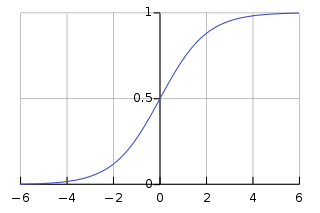 A sigmoid function is convex for values less than a particular point, and it is concave for values greater than that point: in many of the examples here, that point is 0.